
For more than a thousand years, Byzantine art shaped the visual and spiritual culture of the eastern Mediterranean.
From magnificent churches and mosaics to illuminated manuscripts, crosses, jewelry, and intricate decorative objects, Byzantine artists developed a distinctive artistic language filled with symbolism, spirituality, and extraordinary craftsmanship.
Its influence can still be seen throughout Greece today.
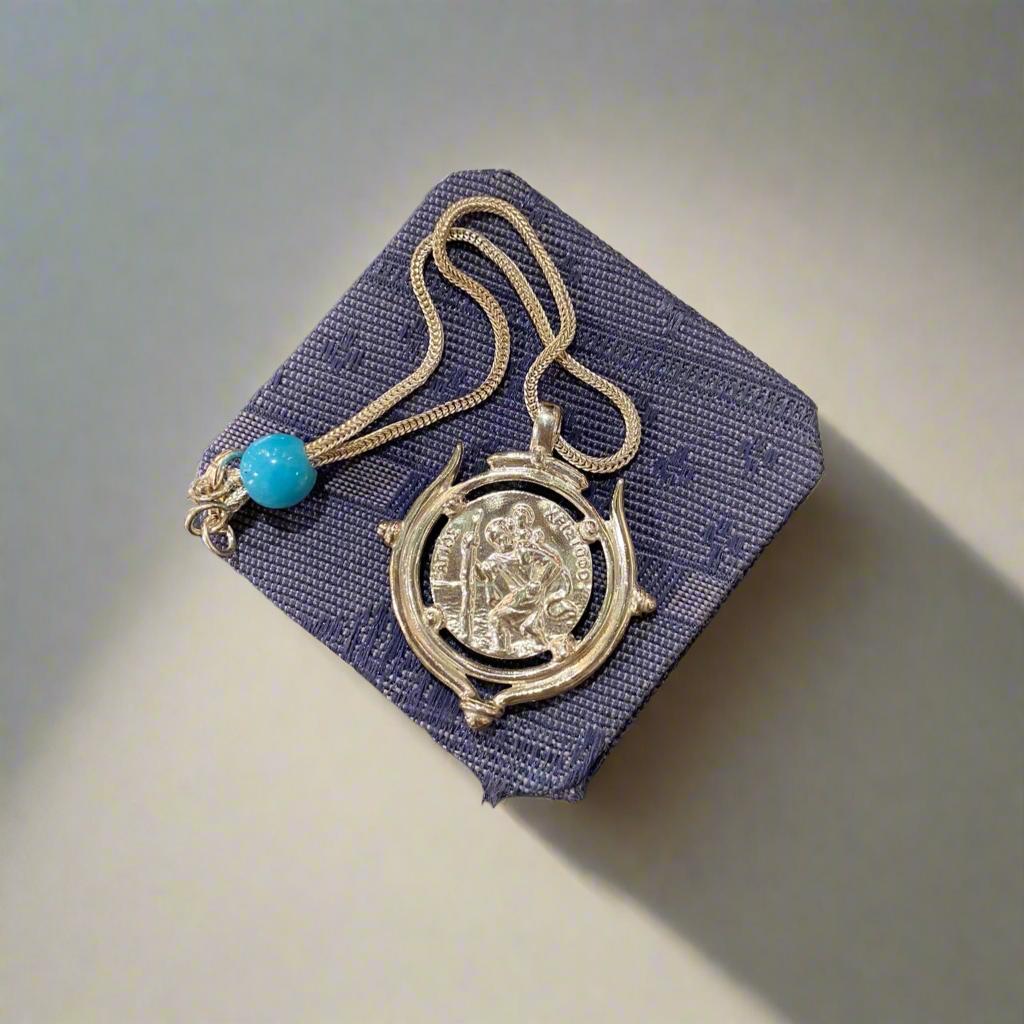
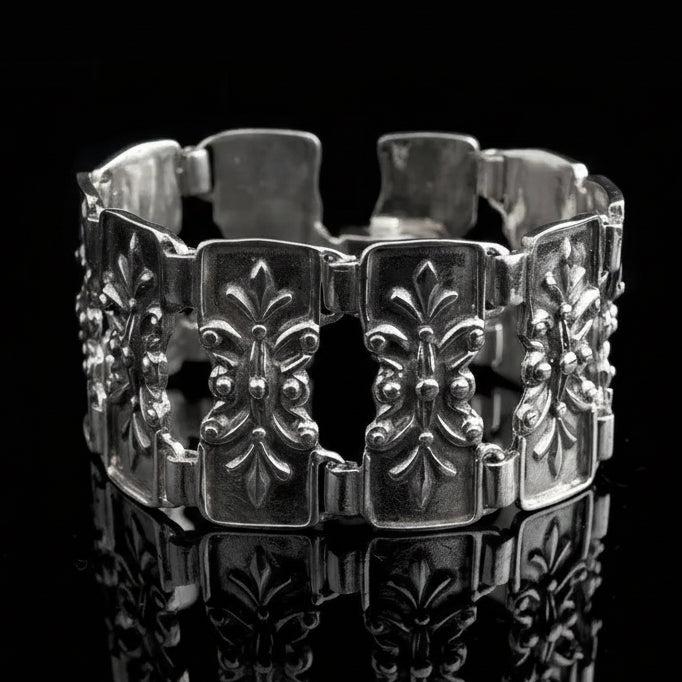
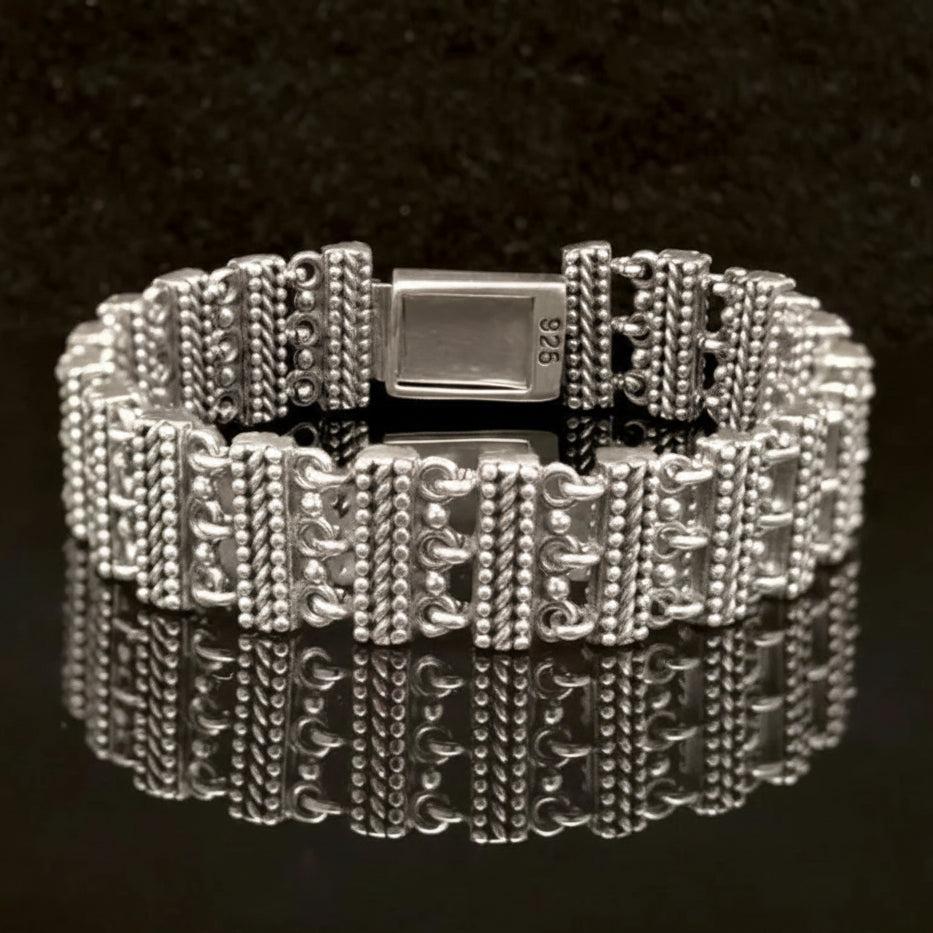
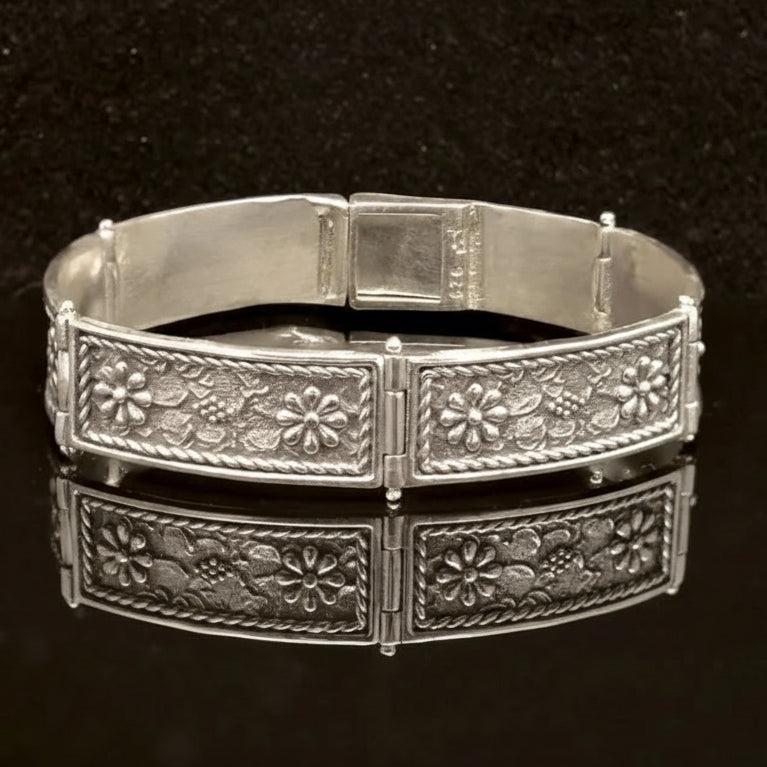
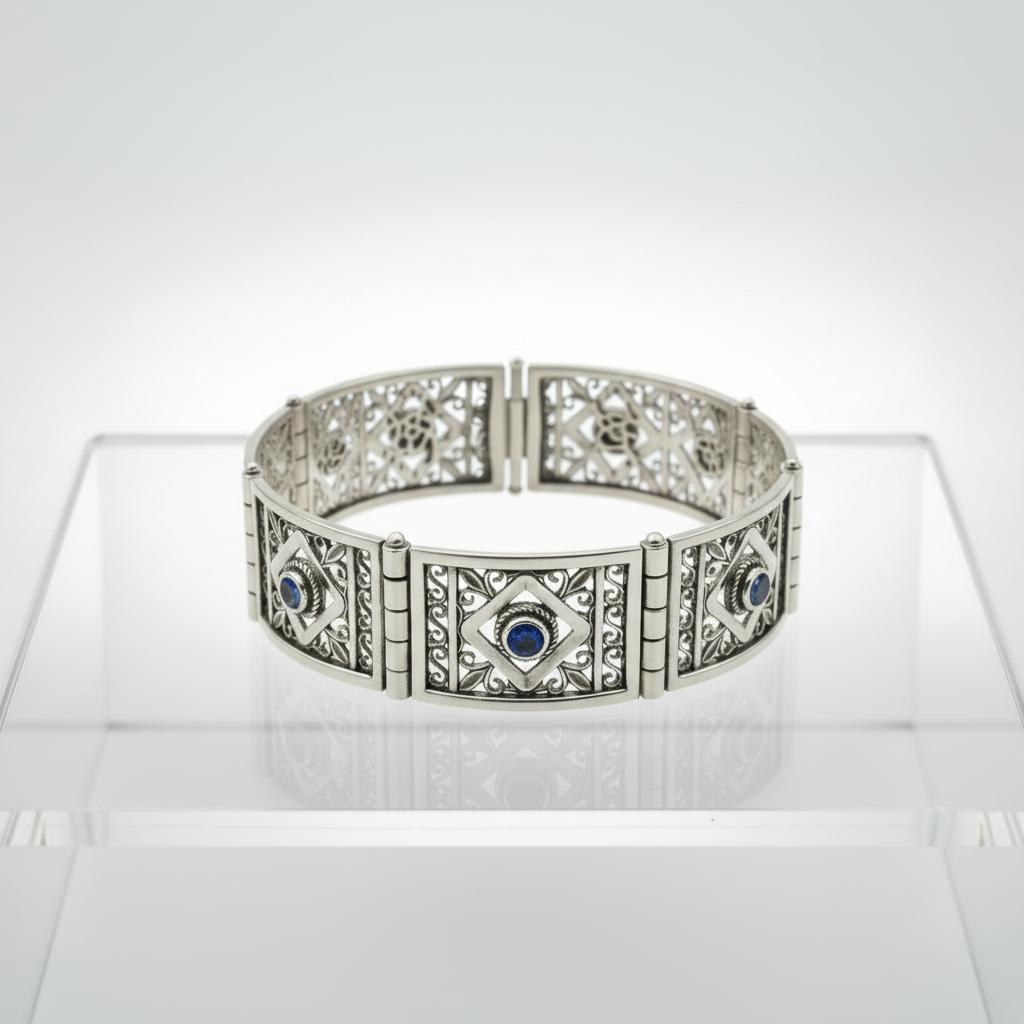
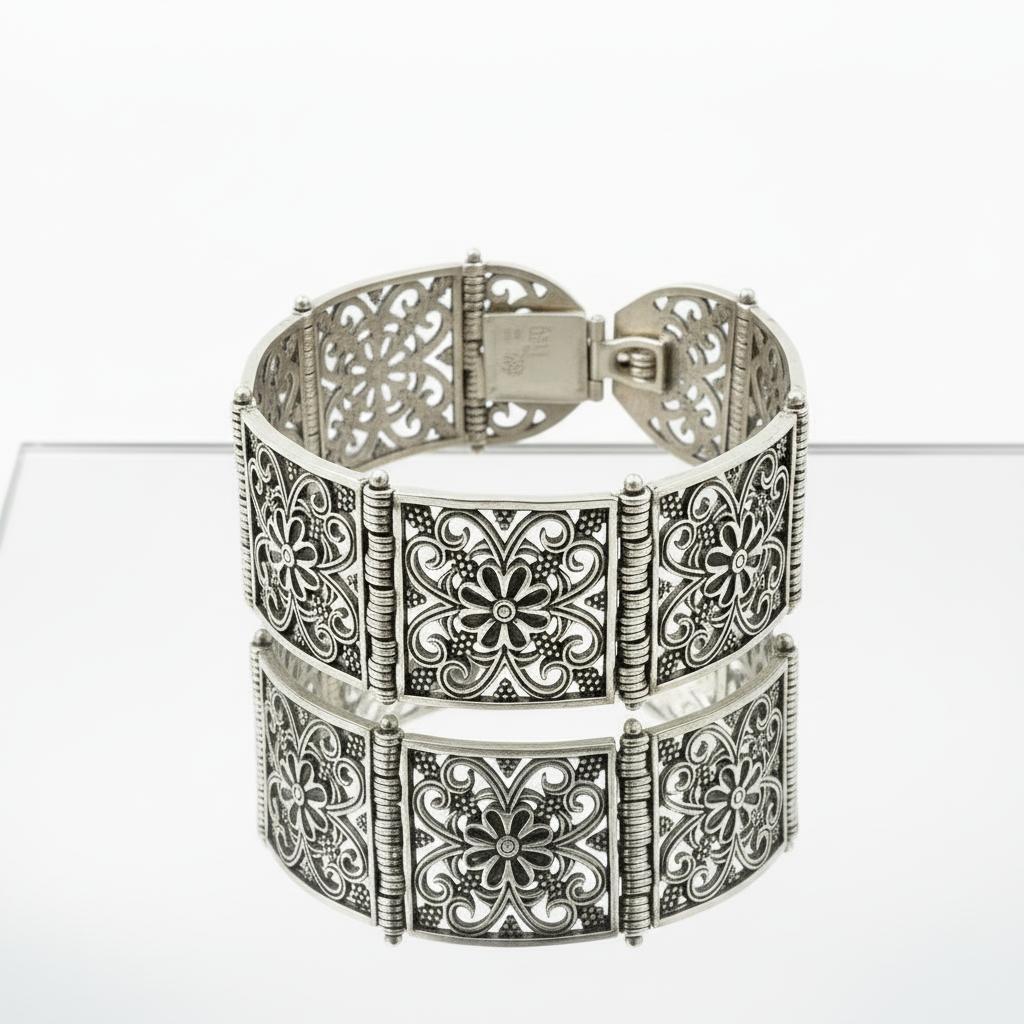
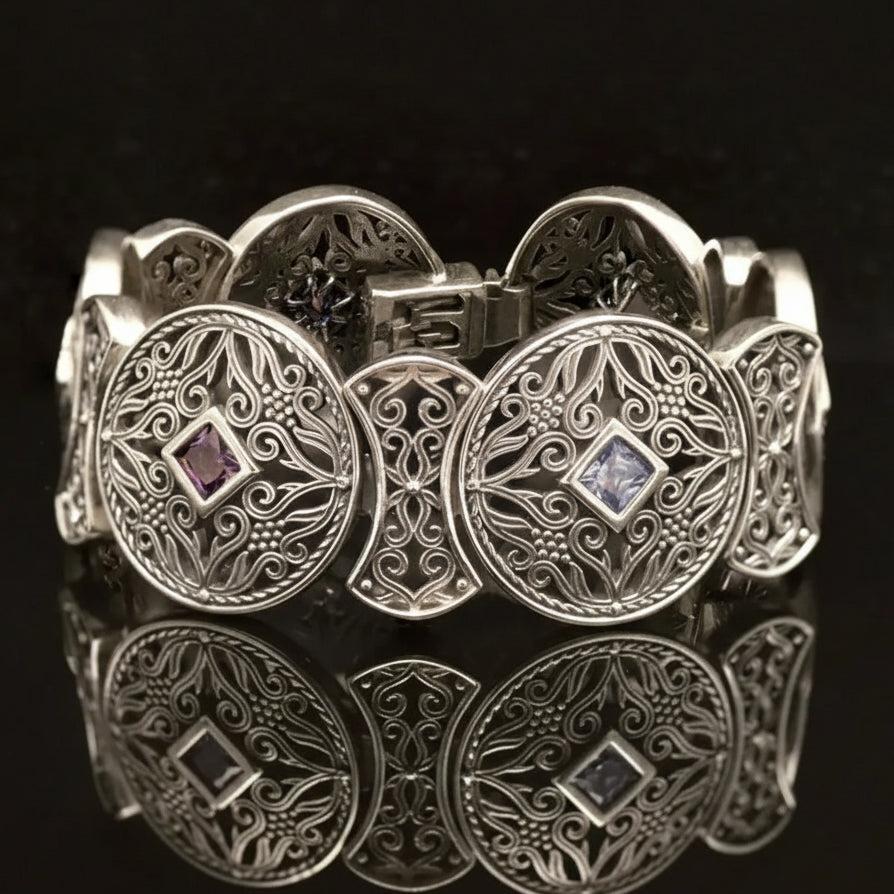
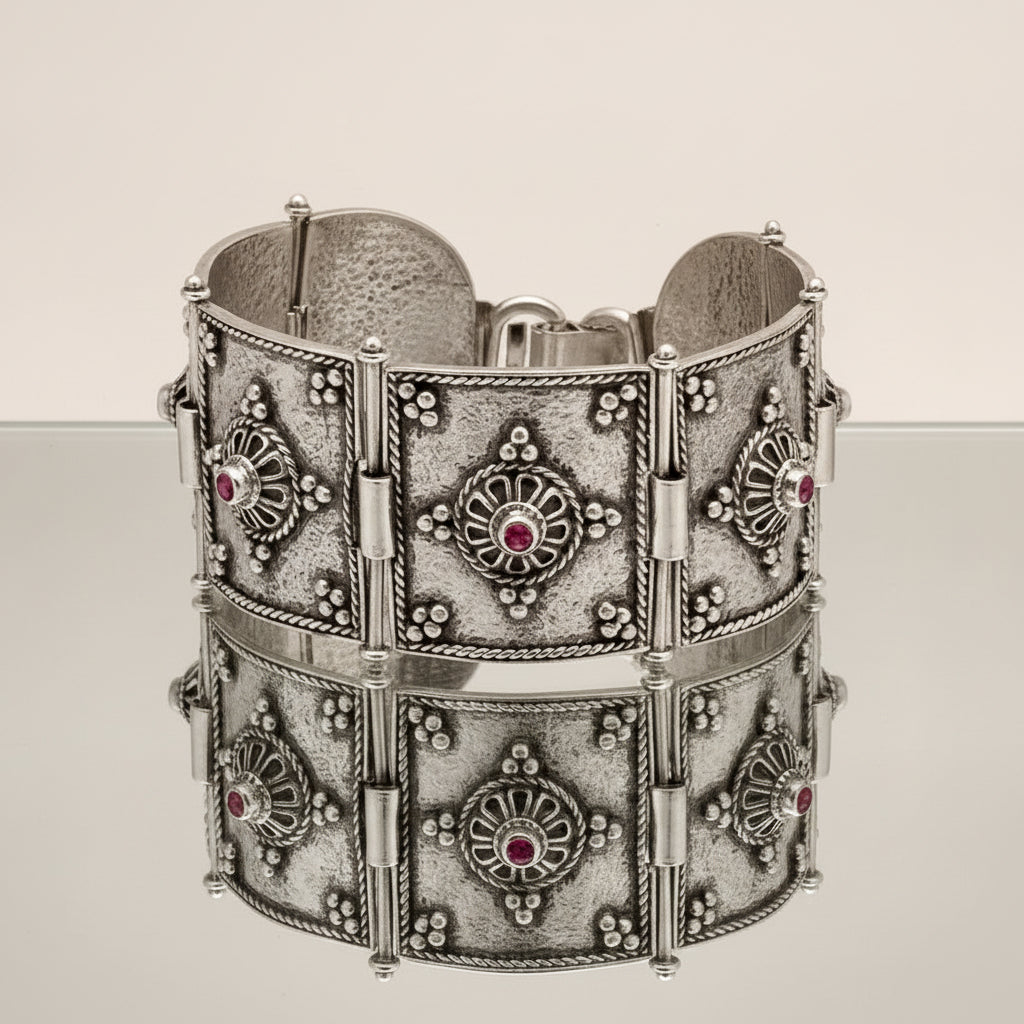
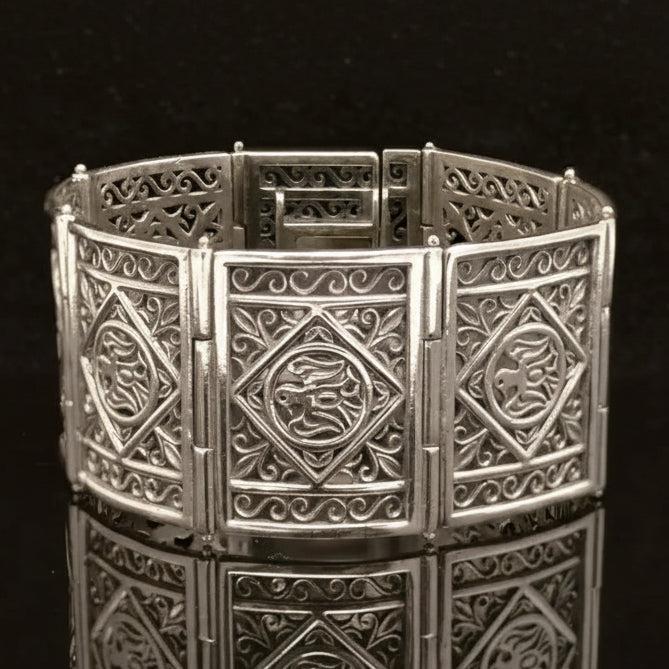
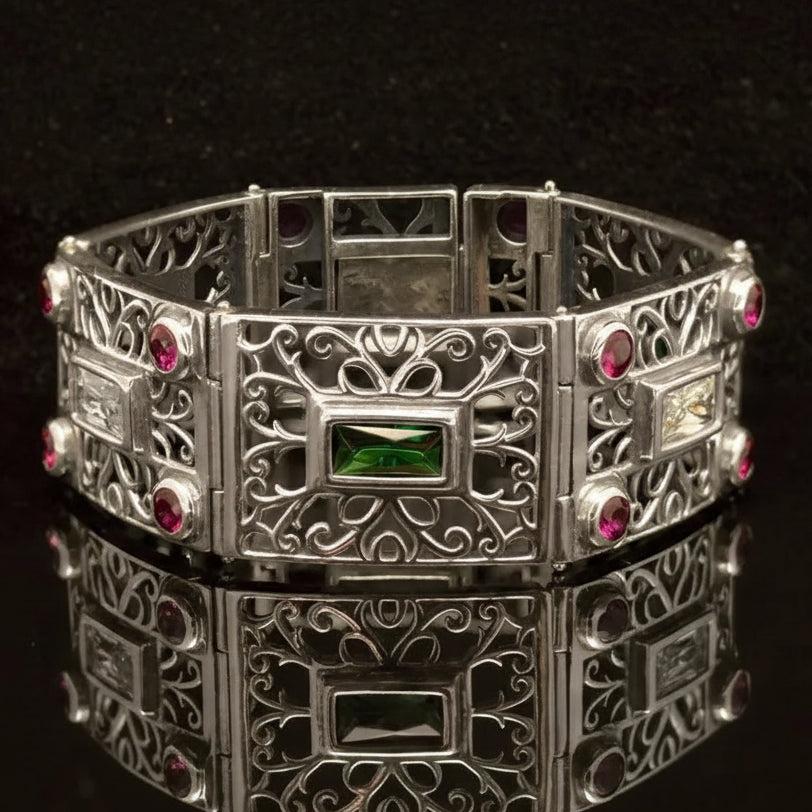
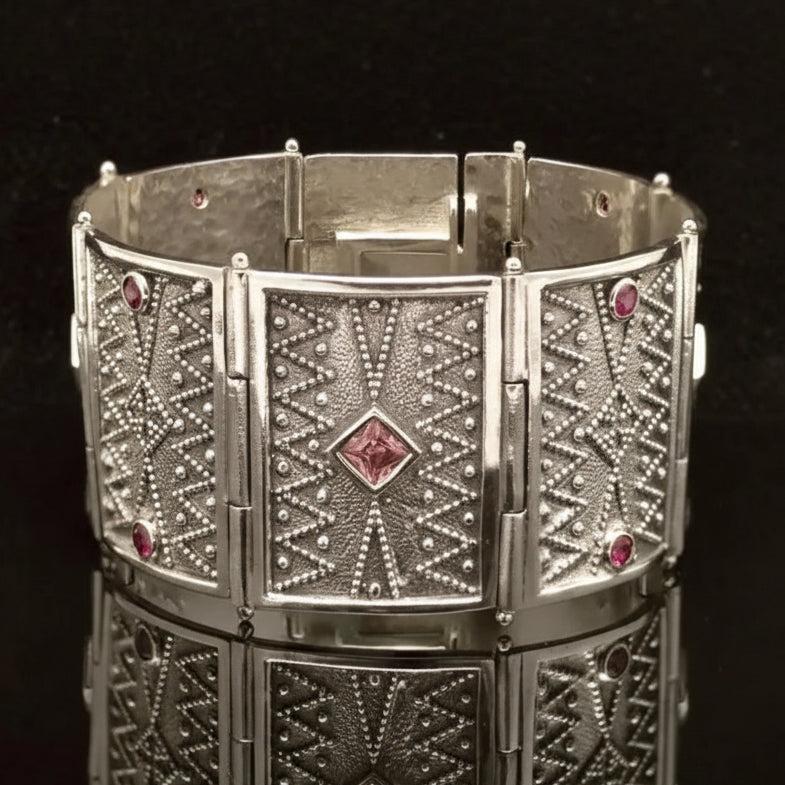
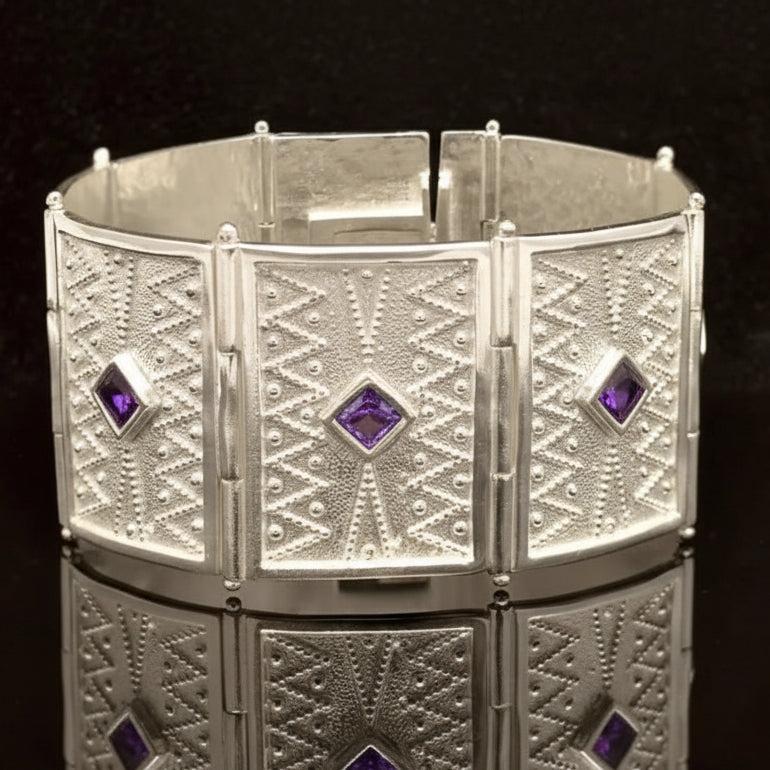
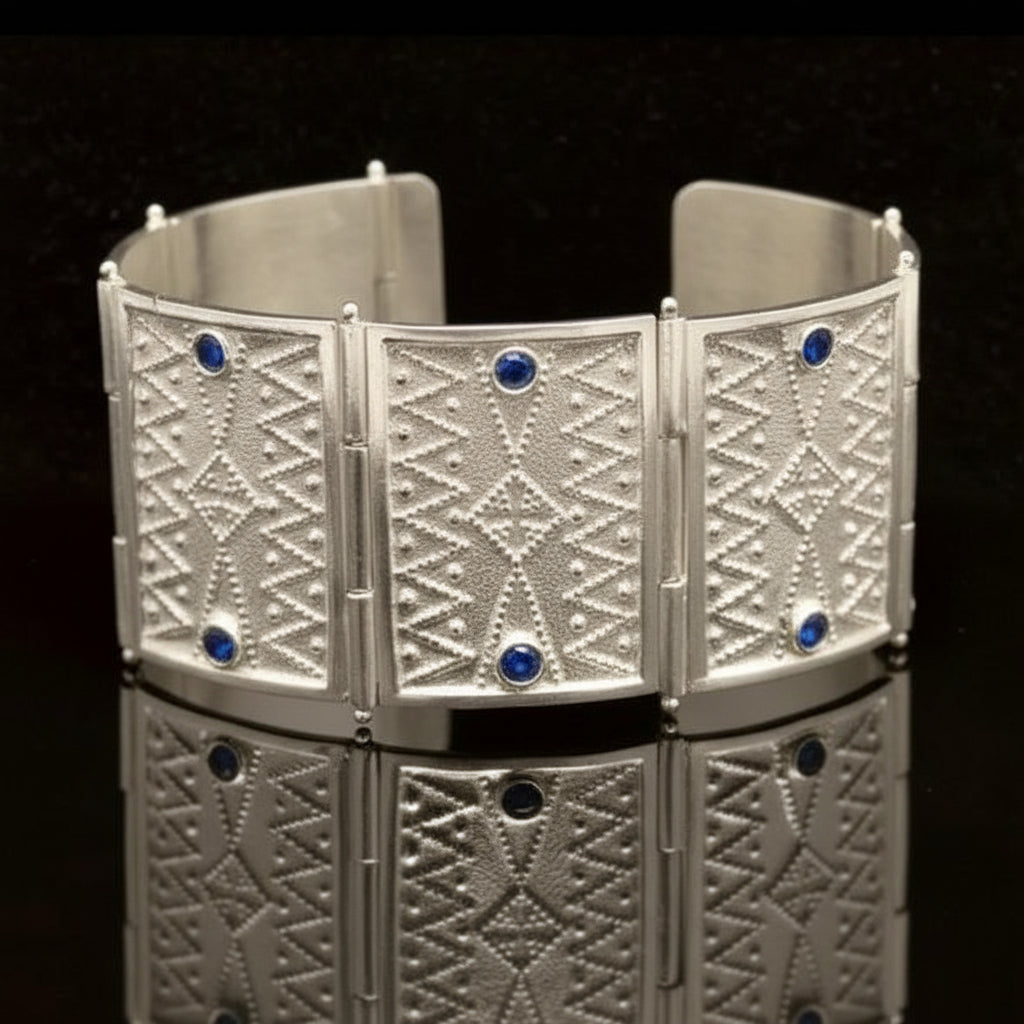
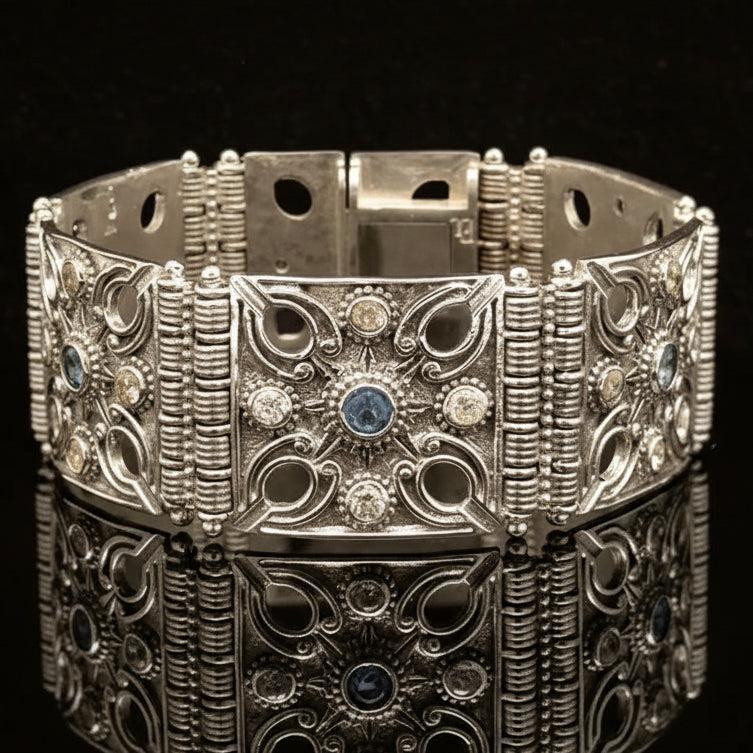
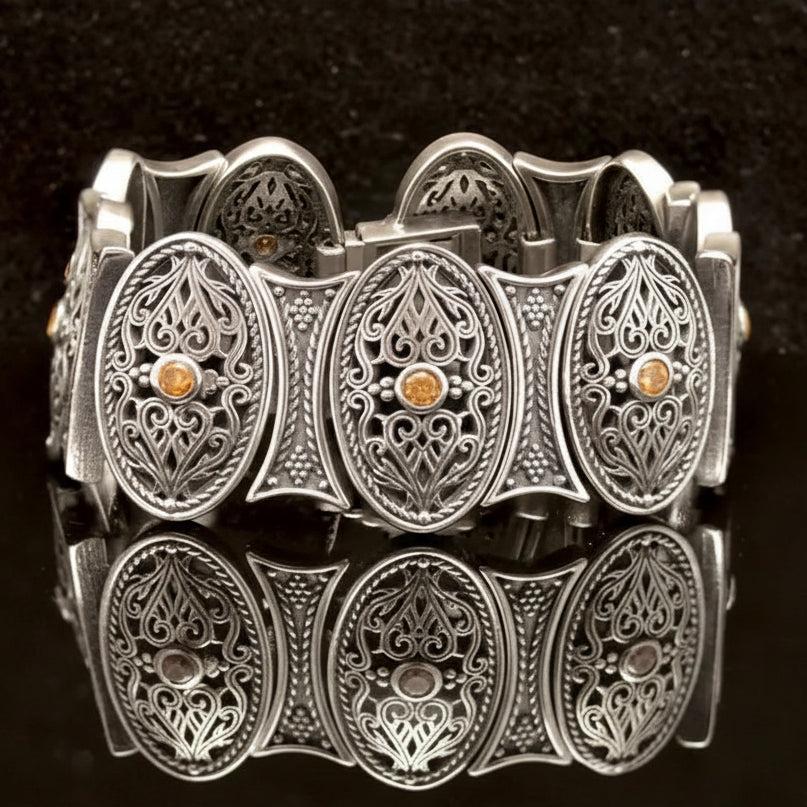
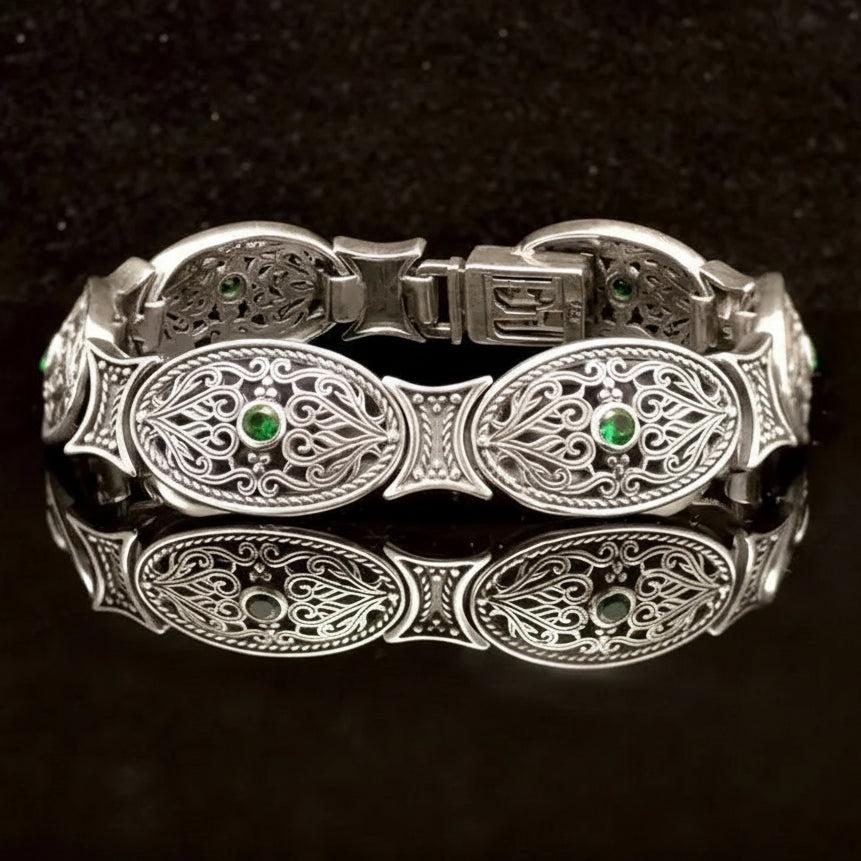
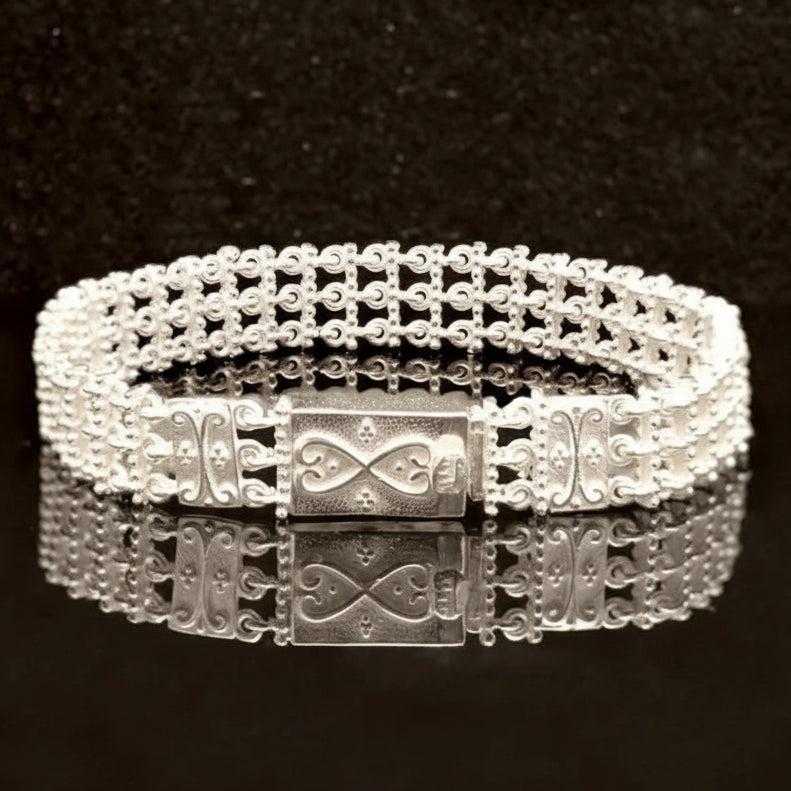
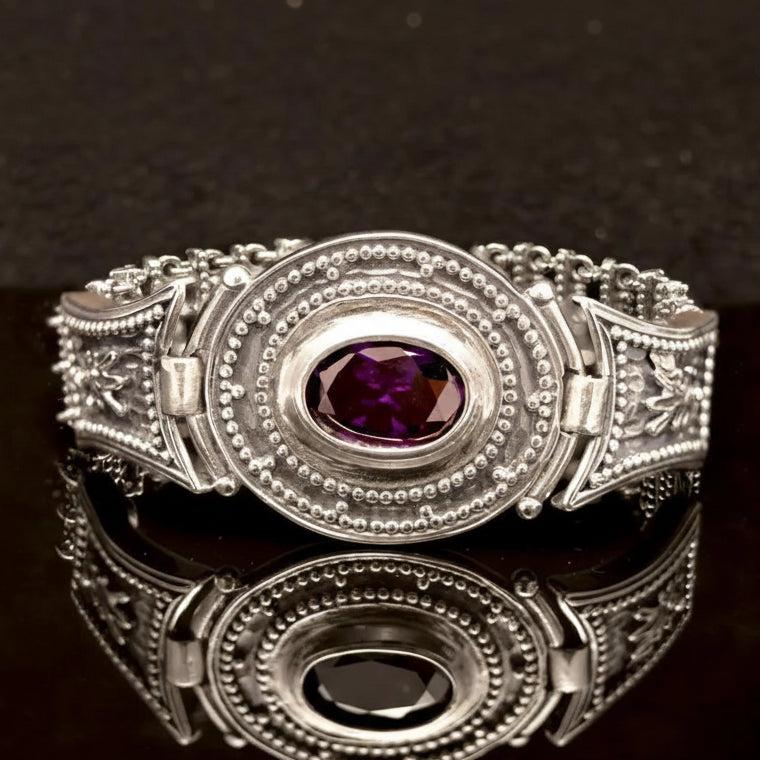
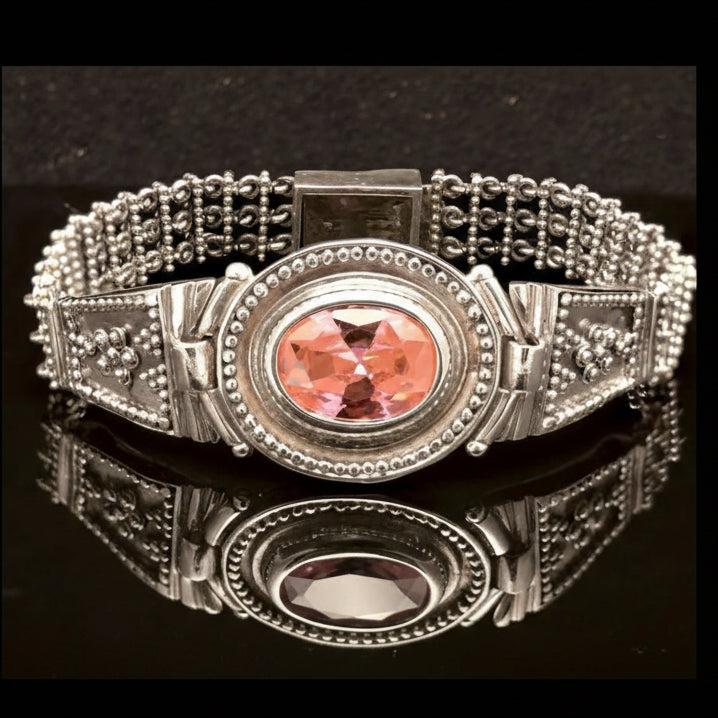
At Eleftheriou EL, the Byzantine Collection draws inspiration from this remarkable heritage, transforming elements of Byzantine art and symbolism into contemporary handcrafted creations.
What Was Byzantine Art?
The Byzantine Empire developed from the eastern Roman Empire and lasted, in various forms, from late antiquity until the fall of Constantinople in 1453.
Its cultural center was Constantinople, while its artistic influence extended throughout the eastern Mediterranean, the Balkans, and beyond.
Byzantine art was particularly associated with Christian religious expression, but it also incorporated traditions inherited from the ancient Greek and Roman worlds.
This combination created an artistic tradition that was both deeply spiritual and visually distinctive.
A Language of Symbols
One of the most fascinating characteristics of Byzantine art is its use of symbolism.
Images and decorative elements were not simply chosen for their beauty. They could communicate religious ideas, stories, identities, and beliefs.
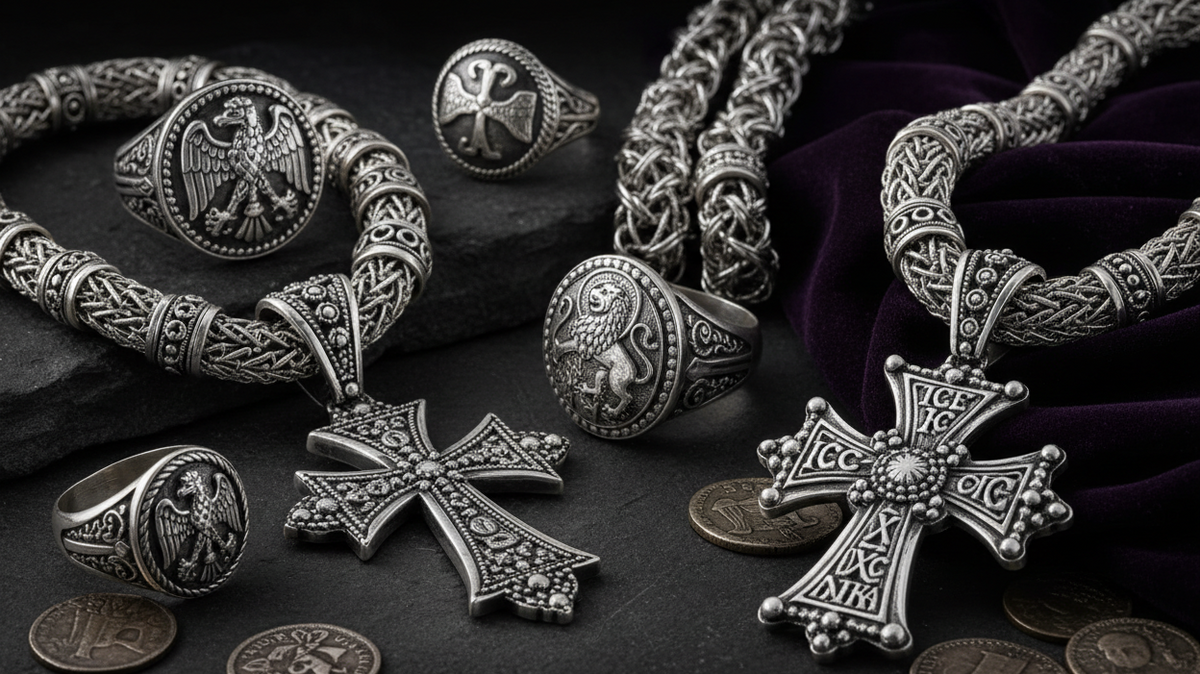
The cross, for example, became one of the most important symbols of Christianity and appears throughout Byzantine architecture, manuscripts, mosaics, jewelry, and decorative art.
Other recurring elements included vines, flowers, geometric patterns, birds, crowns, and elaborate ornamental designs.
The Byzantine Cross
Among the most enduring symbols of Byzantine heritage is the cross.
Byzantine crosses appear in many different forms, from simple and restrained designs to elaborate crosses decorated with intricate patterns and gemstones.
They were used in churches, manuscripts, personal devotion, jewelry, and ceremonial objects.
Today, Byzantine-inspired crosses continue to be treasured not only for their religious significance but also for their artistic and historical character.
Gold, Silver and Precious Craftsmanship
Byzantine artisans were highly skilled in working with precious materials.
Gold and silver were used extensively in religious objects, jewelry, icons, crosses, and ceremonial pieces.
Techniques such as engraving, repoussé, filigree, and the use of precious and semi-precious stones allowed craftsmen to create remarkably detailed works.
Jewelry was therefore part of a much broader tradition of Byzantine craftsmanship in which materials, technique, and symbolism worked together.
Mosaics and the Byzantine Aesthetic
Few things represent Byzantine art more vividly than its mosaics.
The interiors of important Byzantine churches were often decorated with luminous mosaics composed of thousands of tiny pieces of colored glass and stone.
The famous mosaics of Hagia Sophia and other Byzantine monuments demonstrate the importance of light, color, symmetry, and symbolism in Byzantine visual culture.
Although jewelry is much smaller in scale, many Byzantine-inspired designs share the same appreciation for intricate detail and carefully balanced composition.
Greek Heritage and Byzantine Tradition
Byzantine culture developed from a complex combination of Roman political traditions, Christian beliefs, and Greek language and culture.
Over time, Greek became increasingly important within the Byzantine world, particularly in administration, literature, philosophy, and education.
For this reason, Byzantine history forms an important chapter in the broader story of Greek cultural heritage.
However, Byzantine civilization was not simply a continuation of ancient Greece. It was a distinct historical world that developed over many centuries, incorporating influences from many different cultures.
Understanding this complexity makes Byzantine art even more fascinating.
A Living Artistic Tradition
The influence of Byzantine art did not disappear with the fall of Constantinople.
Its artistic traditions continued through the Orthodox Christian world and influenced architecture, painting, manuscripts, decorative arts, and religious objects for centuries.
In Greece, Byzantine churches, monasteries, museums, and archaeological sites preserve this extraordinary heritage.
The visual language of Byzantine art therefore remains very much alive.
Byzantine Inspiration at Eleftheriou EL
At Eleftheriou EL, our Byzantine Collection takes inspiration from this rich artistic tradition.
Our designs reinterpret Byzantine motifs and symbols through contemporary Greek craftsmanship, creating pieces that connect historical inspiration with modern elegance.
Each creation is handcrafted in Greece, reflecting our commitment to preserving the connection between Greek heritage and skilled craftsmanship.
For those who appreciate Byzantine history, Christian symbolism, or the beauty of Greek decorative art, these pieces offer a meaningful connection to a remarkable period of history.
More Than Decoration
The enduring appeal of Byzantine-inspired jewelry lies in the combination of beauty and meaning.
A cross may represent faith.
A geometric motif may recall centuries-old artistic traditions.
An intricate ornamental design may connect the wearer with the craftsmanship of another era.
These objects can therefore become personal keepsakes—pieces that carry both aesthetic and emotional significance.
A Heritage That Endures
Byzantine art has survived for centuries because it speaks through more than decoration.
It tells stories.
It expresses faith.
It preserves cultural memory.
And it demonstrates the extraordinary skill of the artisans who created it.
Today, contemporary Greek craftsmanship continues that tradition by drawing inspiration from the past while creating objects designed for modern life.
Discover the Byzantine Collection
Explore our Byzantine Collection, handcrafted in Greece and inspired by the symbols, artistry, and cultural heritage of the Byzantine world.
Discover timeless designs that bring centuries of Greek artistic tradition into the present.